Leak detection
Find the leak before anyone breaks concrete
A leak you cannot see is a water bill, a damaged floor and eventually a foundation problem. We isolate the system, listen for the leak and confirm it with pressure and temperature before a single tile is lifted.
Straight answer
How do you know if you have a slab leak?
The reliable signs are a water bill that jumps with no change in habits, a warm spot on the floor, the sound of running water when every fixture is off, and a water meter that keeps spinning with the main shut off inside the house. Two or more of those together justify a professional leak test.
Detection usually costs $250 to $650 depending on how many lines need isolating. Repair is a separate, separately quoted decision that ranges from a fitting repair to a spot reroute to repiping, and you get all the options in writing before choosing.
How we locate a hidden leak
- Fixture isolation. Every valve and appliance is shut off to confirm the leak is on the supply side, the drain side or the irrigation system.
- Meter test. The meter is monitored with the house isolated, which proves whether water is escaping at all.
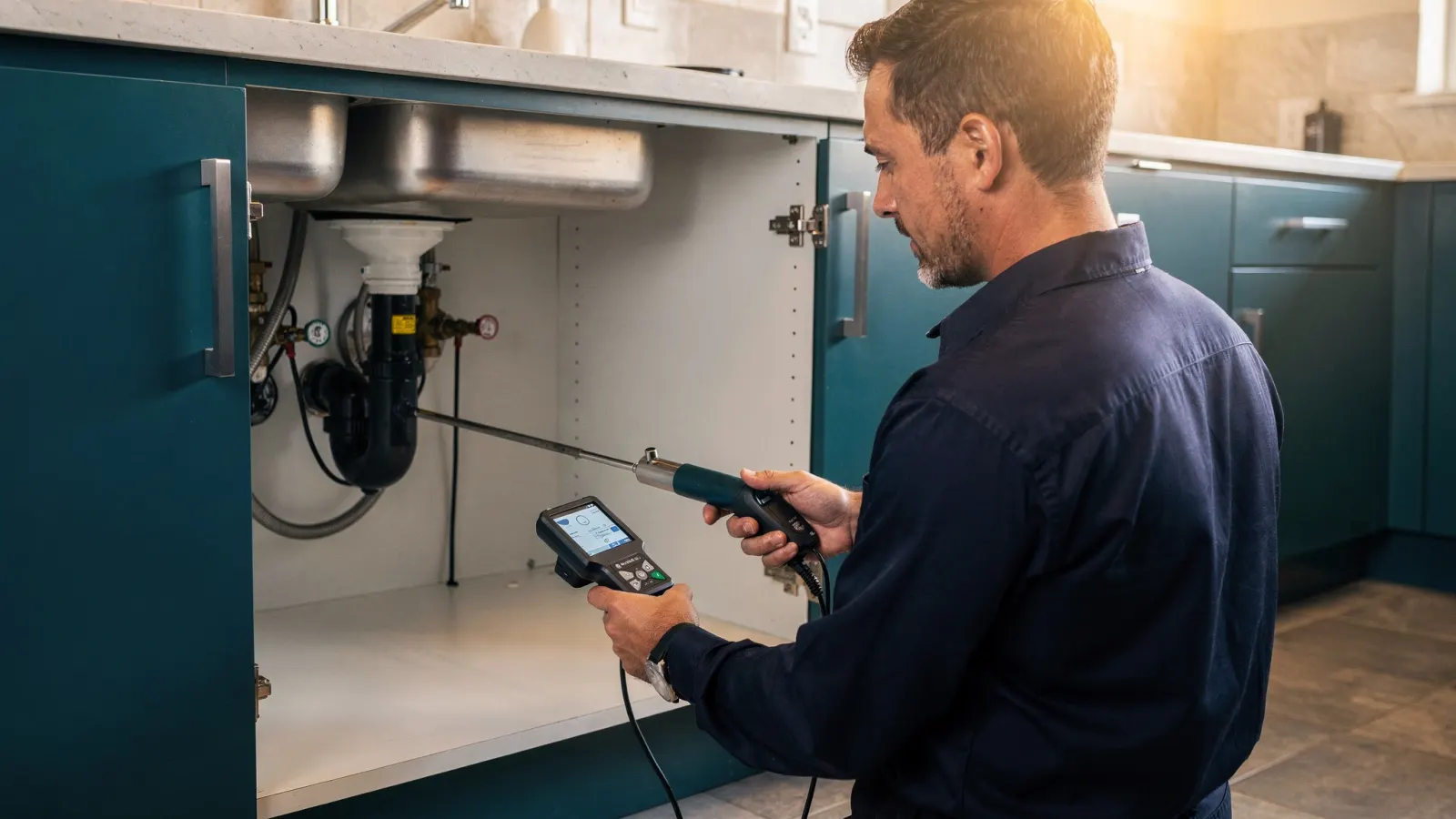
- Acoustic listening. Amplified microphones and ground probes pinpoint the hiss of escaping water under a slab or behind a wall.
- Pressure isolation on each zone. Hot and cold lines are tested separately, which is often what identifies a slab leak in the hot water line.
- Thermal and moisture verification. Infrared and moisture readings confirm the location before any demolition is proposed.
- Written findings with photos and a repair plan that includes spot repair, reroute and repipe options with prices.
Why Arizona
Why slab leaks are so common in Valley homes
- Many homes built before 1990 have copper under the slab, and Valley soil movement flexes it until pinholes form.
- Hard, mineral-heavy water attacks the inside of copper lines from the day they are installed.
- Caliche soil expands and contracts with irrigation cycles, stressing pipe joints season by season.
- Hot water lines under a slab sit in soil that is warm for months, accelerating corrosion.
None of that means every older home needs repiping. It means a leak should be located and repaired deliberately rather than dug up at random.
Learn about repiping options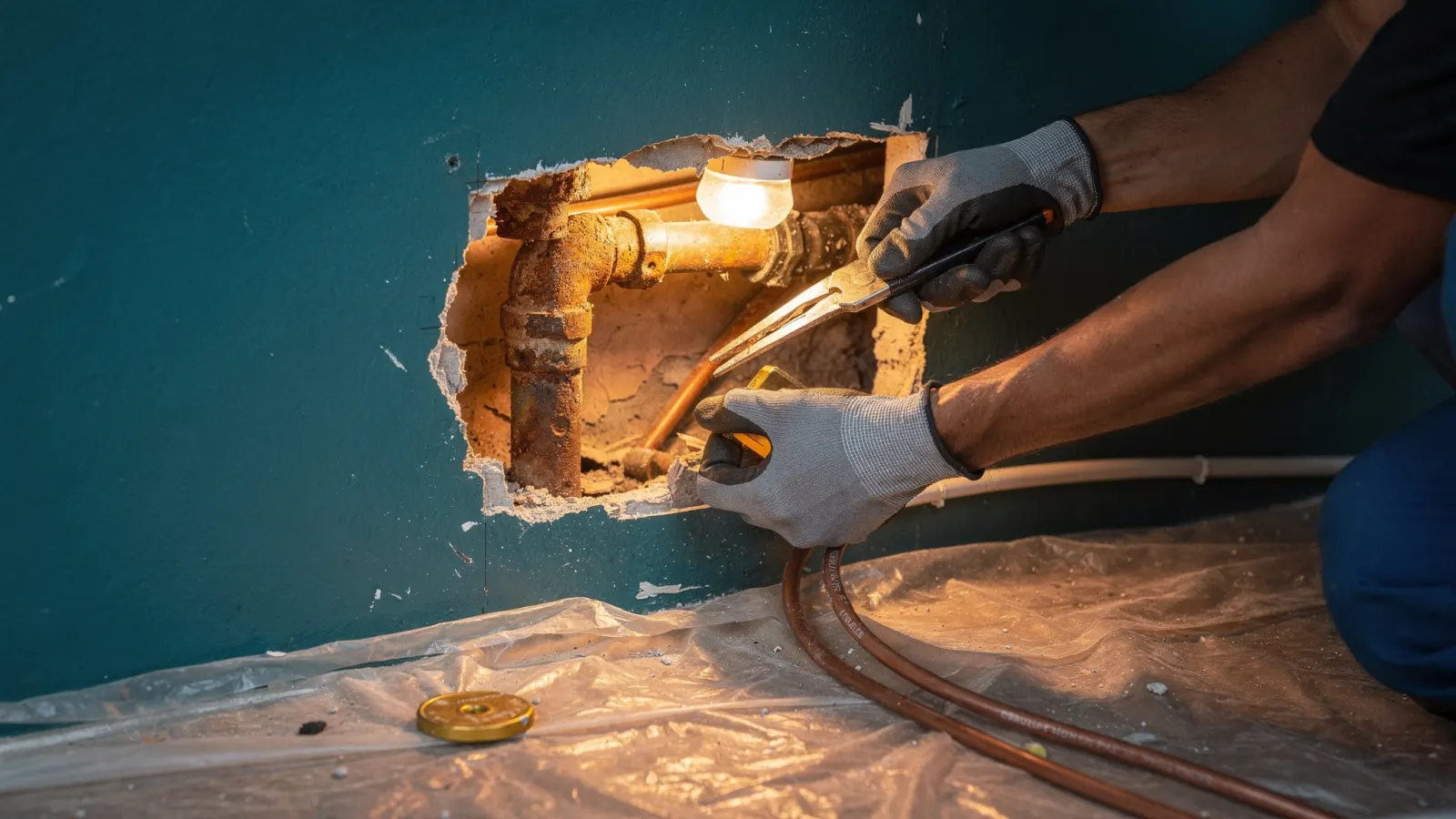
Questions
Leak detection questions
Watch for a water bill that jumps with no change in use, a warm spot on the floor, running-water sounds with every fixture off, damp carpet or baseboards, and a meter that keeps turning with the house shut down. Two or more of those justify testing.
Typically $250 to $650 depending on isolation work needed. Repair is quoted separately once the test locates the leak, whether that is a fitting repair, a spot reroute or a repipe recommendation.
Not necessarily. A single leak can often be spot repaired or rerouted overhead. Repiping is a separate decision based on the age and overall condition of the system, and we price both so you are not pushed into the larger job.
Detection is non-invasive in most homes. We isolate lines, listen acoustically and confirm with pressure and thermal readings, so demolition is limited to the one spot where the repair actually happens instead of a guessed area of floor.
Water bill jumped or the meter never stops?
Get the leak located before it costs you a floor. Same-day leak inspections across the metro.