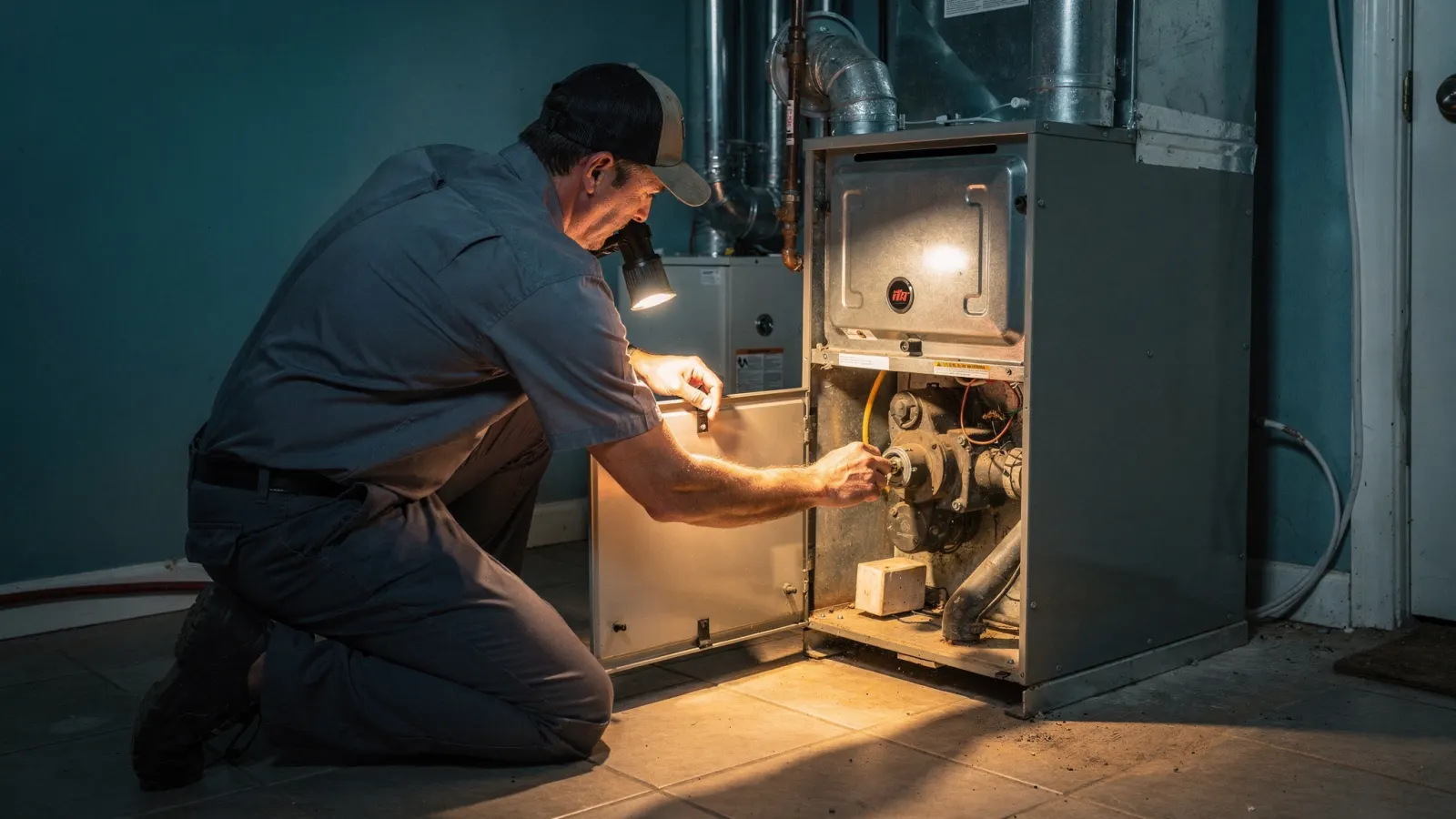
Heating services
Heating service built for the way Arizona homes actually heat
Valley winters are short, so heating systems sit idle for eight months and then get asked to work on the first cold night. That is exactly when ignitors, flame sensors and reversing valves fail. We repair, replace and maintain furnaces and heat pumps across the metro.
Answer first
Furnace or heat pump: which one do you have?
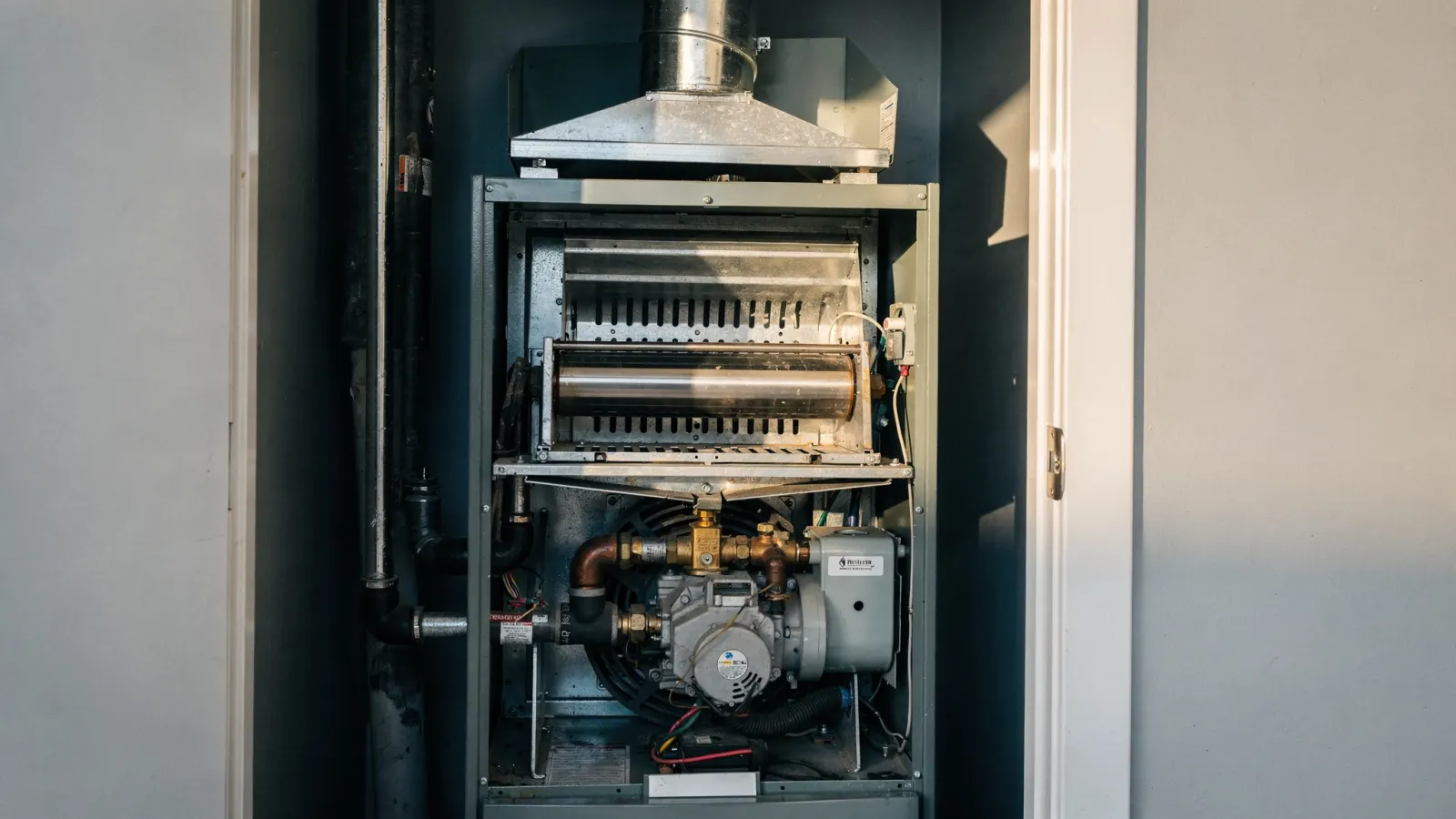
A gas furnace burns fuel to make heat and shows up as a tall metal cabinet indoors. A heat pump moves heat instead of creating it, and it looks like an air conditioner that also runs in reverse, with an outdoor unit that operates year round. If your HVAC system has an outdoor unit running in January, you have a heat pump.
Both systems need different service, parts and skills, and mixing up the two is how homeowners end up with a wrong diagnosis. Our technicians identify the system type on arrival and explain what they found before quoting anything.
Safety first
Any gas smell means stop and call, not troubleshoot
If you smell rotten eggs near a furnace, water heater or gas line, leave the house, do not flip switches, and call Southwest Gas or 911 from outside before calling anyone else. We handle gas line repair, pressure testing and appliance connections, but an active leak is an emergency service call for the utility and fire department.
- Carbon monoxide is a separate risk from gas leaks and has no smell at all. A CO alarm near sleeping areas is basic safety in any home with gas appliances.
- Cracked heat exchangers are a serious carbon monoxide hazard, and we inspect for them on every furnace visit with a camera.
- A furnace that short-cycles, smells odd or shows a yellow rather than blue flame needs a technician, not another season of use.
Pair heating work with these services
Furnace out on a cold night?
We run heating calls through the winter and answer the phone around the clock, every day of the year.