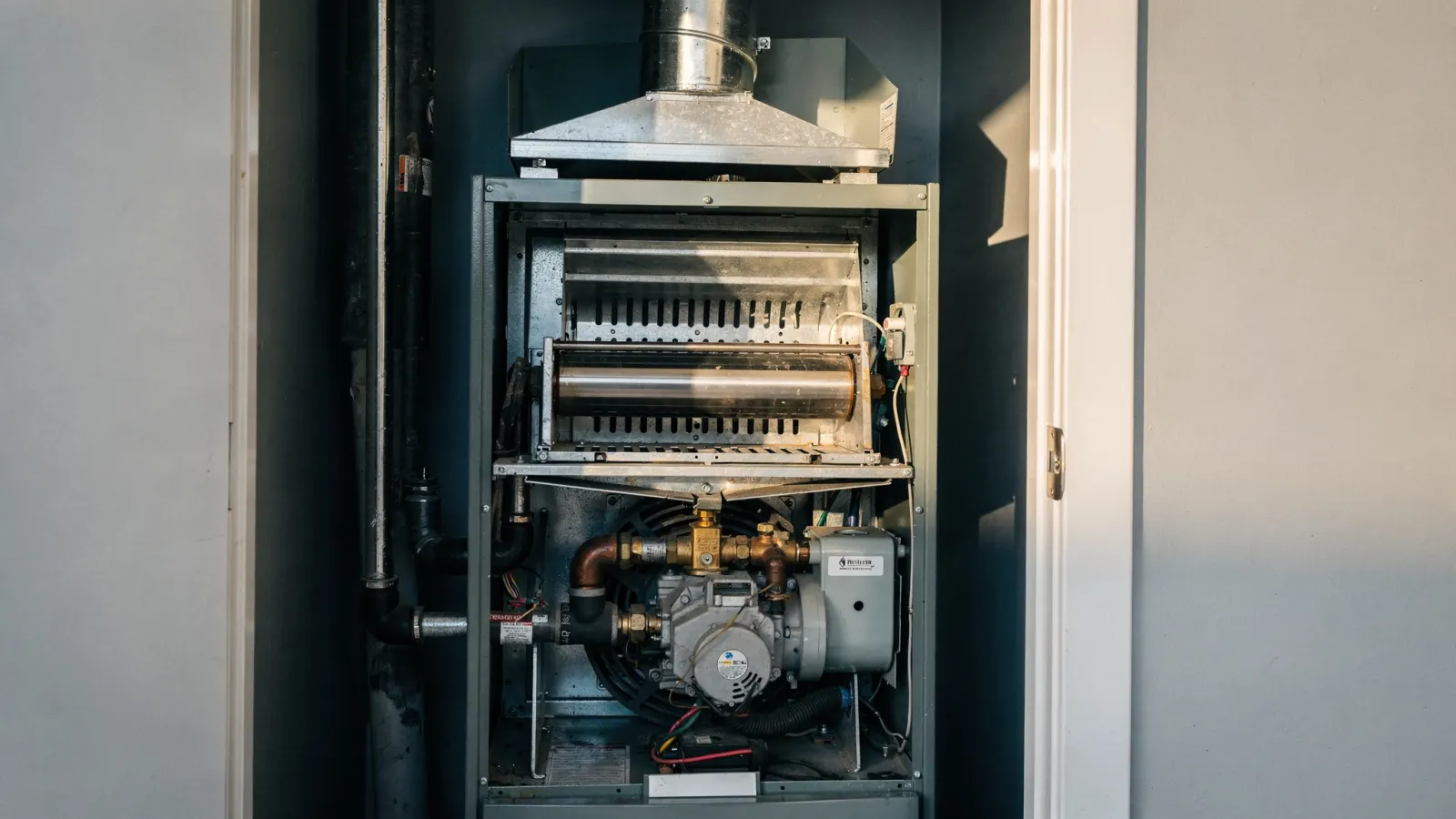
Furnace repair
Furnace repair for the week your heat finally gets used
A Valley furnace sits idle for eight months, then gets called on the first cold night. Dust, insects and a long rest are exactly what make ignitors and sensors fail, so we stock those parts on every truck.
Straight answer
Why is your furnace blowing cold air?
Four failures explain most no-heat calls: a burned-out ignitor that never lights the burner, a dirty flame sensor that shuts the burner off within seconds, a blocked flue or failed pressure switch that prevents ignition entirely, and a thermostat set to fan only. If the burner lights and quits after five to ten seconds, it is almost always the flame sensor.
Most furnace repairs in the Valley cost $180 to $700 installed, and the diagnostic fee is credited toward the repair. You get the price in writing before any part is replaced, and a heat exchanger inspection with every visit because that is the one furnace failure that is a genuine safety issue.
What our furnace repair visit includes
- Ignition system testing including ignitor resistance, flame sensor microamps and gas valve operation.
- Combustion air and flue check for blockage, improper slope, bird nests and disconnected venting.
- Heat exchanger inspection by camera, with a red tag and shutoff if the unit is unsafe to run.
- Blower and airflow check including filter condition, wheel cleanliness and motor amp draw.
- Carbon monoxide reading in the supply air and near the unit, reported to you either way.
- Written findings with photos and a fixed repair price, plus notes on anything that can wait.
Warning signs
When a furnace needs a technician today
- No heat at all, with the thermostat calling for it.
- Burner lights and shuts off within seconds, repeatedly.
- A yellow or orange flame instead of a steady blue flame.
- Any smell of gas, or a carbon monoxide alarm sounding.
- Rumbling, booming or popping sounds at startup.
- Soot streaks, corrosion or moisture around the flue.
If you smell gas or your CO alarm sounds, leave the house and call the utility or 911 first, then call us for the repair.
Past repairing? See furnace installation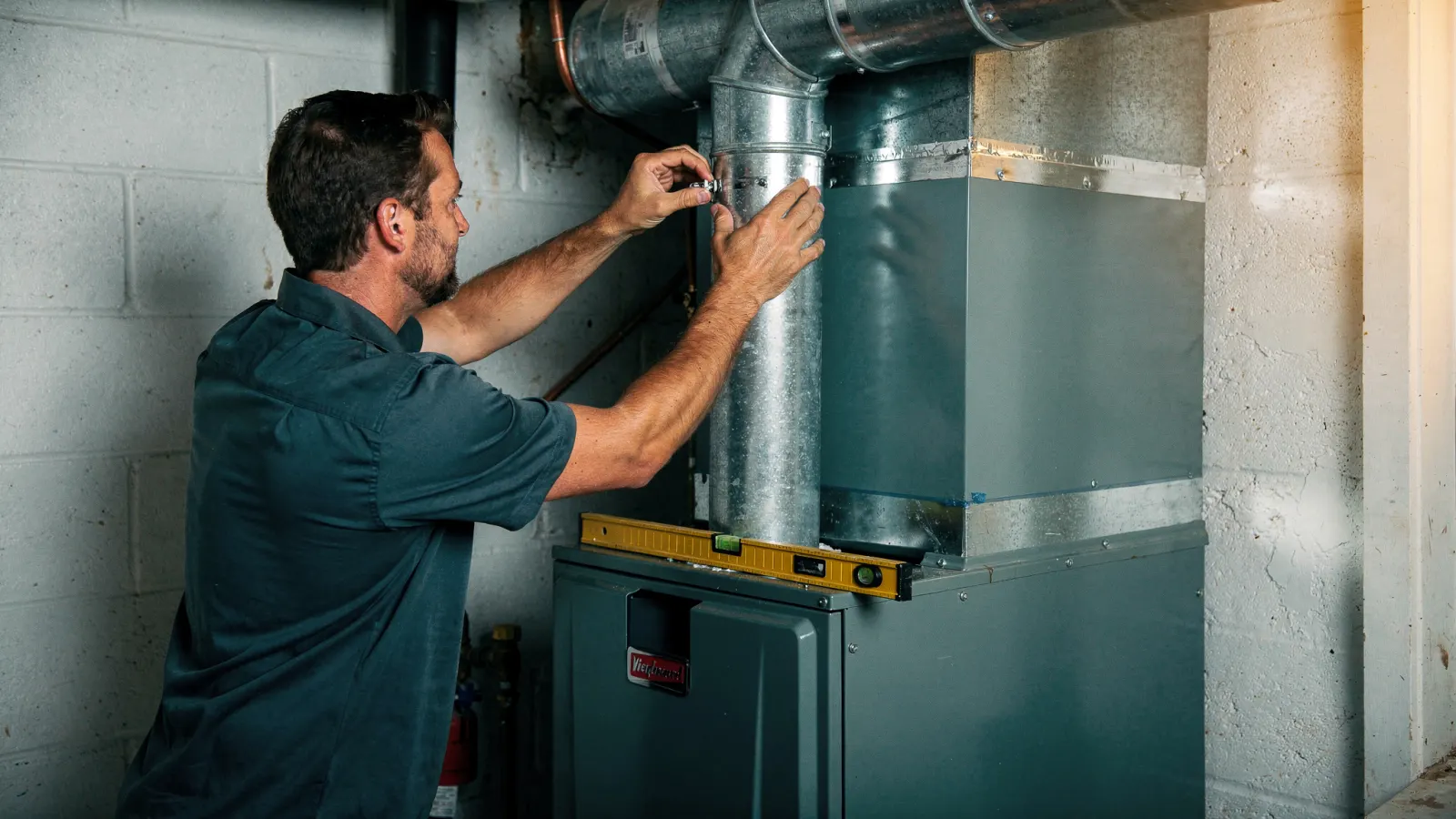
How it goes
What happens when you call for furnace repair
- Call (602) 555-1234. Tell the dispatcher whether you smell gas, because that changes how we respond.
- Arrival and diagnosis. We test ignition, airflow, flue and combustion, usually within 30 to 45 minutes.
- Written price. You approve a fixed price before any part is installed.
- Repair and verify. We confirm temperature rise, CO readings and burner operation before leaving.
- Documentation. Photos of the failed part and the final readings arrive with your invoice.
Furnace repairs are priced upfront and itemized. If the honest answer is that the unit is unsafe or uneconomical to repair, you get that in writing too, along with replacement options. See heating replacement.
Questions
Furnace questions, answered
Usually a failed ignitor, a dirty flame sensor cutting the burner off within seconds, a blocked flue or pressure switch fault, or a thermostat set to fan only. A burner that lights and quits after five to ten seconds points at the flame sensor almost every time.
Most repairs run $180 to $700 installed. Ignitors, flame sensors and gas valves sit at the low end; inducer assemblies, blower motors and control boards sit higher. The diagnostic fee is credited toward the repair you approve.
Yes. It can leak carbon monoxide into the living space, which is why we inspect heat exchangers by camera on every furnace visit and red-tag a unit that is unsafe to operate. If yours is cracked, we shut it down and walk you through replacement options.
Fifteen to twenty years is typical. Valley furnaces run fewer hours than in cold climates so the cabinet and heat exchanger often outlast the electronics, but ignitors, sensors and control boards still fail, and months of idleness invite dust and insect problems.
No heat tonight?
We answer the phone around the clock and dispatch heating calls through the winter.