Heat pump maintenance
Maintenance for the system that never gets a season off
A heat pump in the Valley runs nearly every day of the year. That means it accumulates more hours than a furnace and an air conditioner combined, and its tune-up list covers both halves of the system plus the valves that switch between them.
Straight answer
How often does a heat pump need maintenance in Arizona?
Twice a year: a cooling-season tune-up in spring and a heating-season inspection in fall. A heat pump runs year round here, so ignoring the fall visit means the reversing valve, defrost control and heat strips go unchecked until the morning you need them.
The fall visit is the one homeowners skip, and it is the one that catches the failures you cannot test in summer. Both visits together take about two hours a year and cover the parts that cost the most to replace.
What heat pump maintenance covers
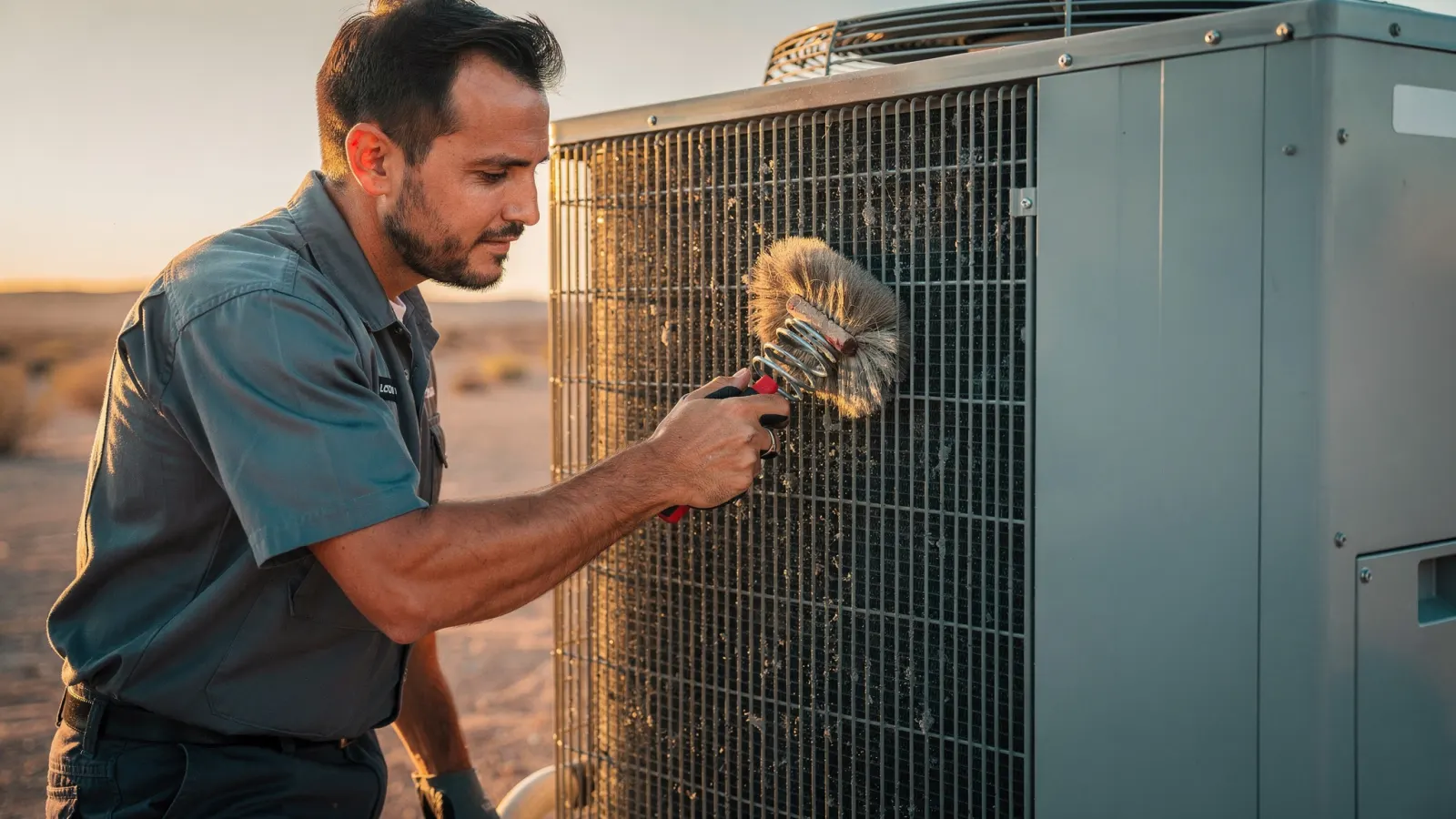
- Outdoor coil cleaning inside and out, since desert dust packs the fins from the back as well as the front.
- Indoor coil inspection for dust build-up and microbial growth in monsoon humidity.
- Reversing valve and defrost control testing in both directions, which only a heat pump requires.
- Charge verification by subcooling in cooling and a heating-mode performance check.
- Capacitor, contactor and amp draw testing compared against nameplate ratings.
- Auxiliary heat check so electric strip heat is not doing the heating work all winter at three times the cost.
- Condensate drain clearing plus filter and airflow verification with a documented temperature split.
- Written report with photos of anything trending toward failure, priced separately so you can plan.
Early warning signs
What a heat pump looks like before it fails
- Longer run times in cooling than the same month last year.
- Auxiliary heat running on mild mornings.
- Higher electric bills with no change in thermostat habits.
- Outdoor unit louder than it used to be, especially at startup.
- Frost that lingers on the outdoor coil after a defrost cycle.
- Small temperature differences room to room that were not there before.
Every one of those is a measurement, not an opinion. We take the reading and show you the trend.
See AC maintenance plans too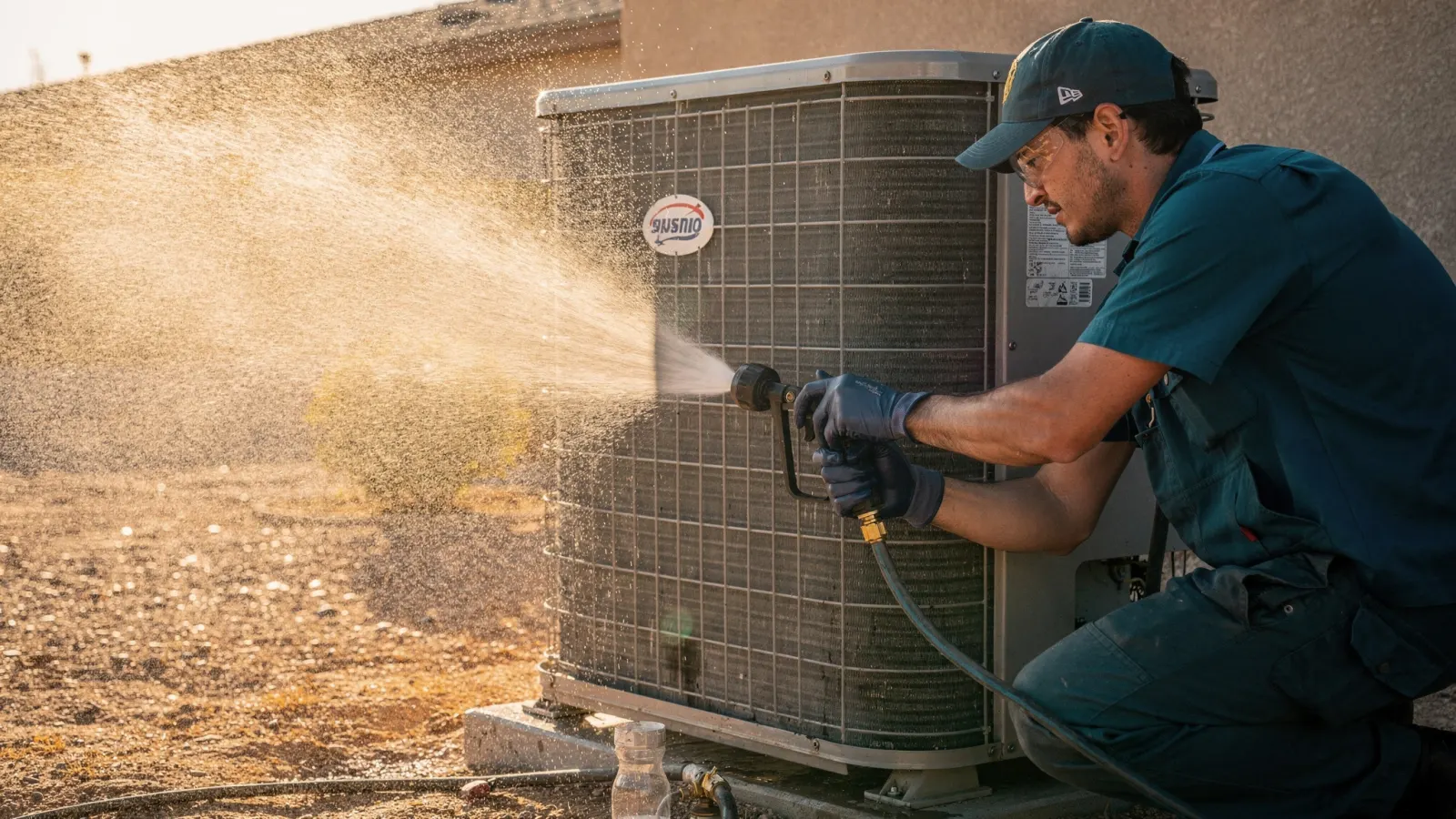
Plans and pricing
Single tune-ups are priced upfront, and a maintenance agreement covers both the spring cooling visit and the fall heating visit. Members get priority scheduling during peak season, which is the difference between a scheduled appointment in July and a three-day wait.
Ask for the plan terms in writing, including what is covered, what is not and how to cancel. No auto-enrollment, no long lock-in. See how our pricing works.
Questions
Heat pump maintenance questions
Twice a year: spring for the cooling season and fall for the heating season. A heat pump runs year round in the Valley, so it collects more operating hours than a furnace or an AC alone, which makes both visits worth doing.
Indoor and outdoor coil cleaning, capacitor and contactor testing, charge verification, defrost control and reversing valve testing, condensate clearing, blower and filter inspection, and documented airflow and temperature split readings with photos of anything trending toward failure.
It removes the most common cause. Dirty coils and an off charge raise head pressure and compressor amp draw, and a tune-up corrects both. It is the cheapest protection you can buy for the most expensive component in the system.
Yes. The fall visit tests the parts that only run in heating mode: reversing valve, defrost control, auxiliary heat strips and thermostat changeover. Those are exactly the components that fail unnoticed until the first cold morning.
Schedule both visits at once
Spring cooling tune-up and fall heating check on one agreement, with priority scheduling in peak season.