AC maintenance & tune-ups
The spring visit that decides whether your AC survives August
Dust in the Valley is relentless, and a condenser coil packed with it runs hotter, pulls more amps and dies younger. A tune-up in March or April is the cheapest insurance an Arizona homeowner can buy.
Straight answer
How often should an Arizona AC be serviced?
Twice a year: a cooling tune-up in March or April before the heat arrives, and a heating check in October. Arizona systems run six to eight months a year in dust, which is far harder service than the same equipment sees in a mild climate.
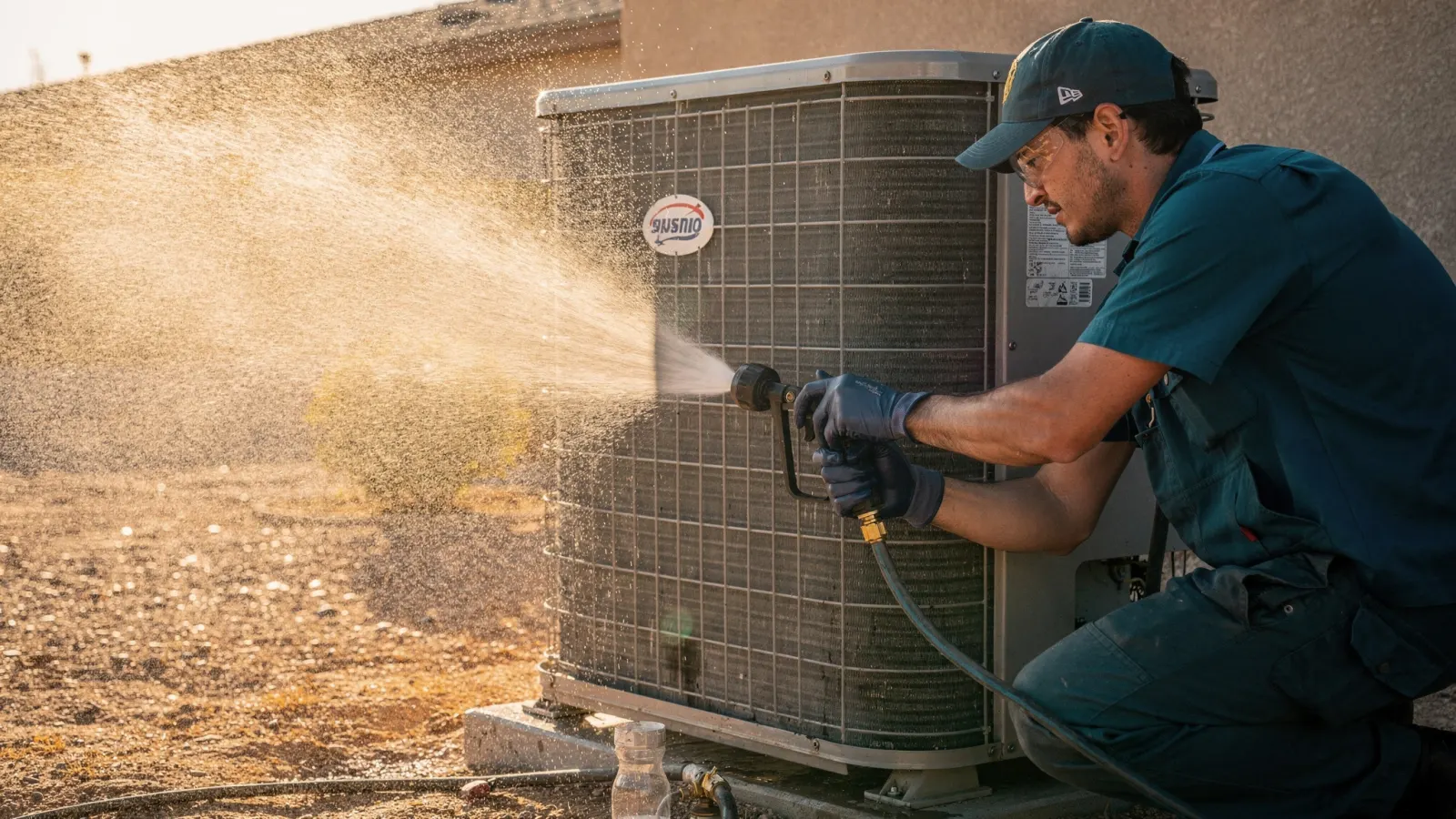
The single most valuable item in a tune-up is condenser coil cleaning. A dirty coil raises system head pressure, which raises compressor amp draw, which is how compressors die. Everything else on the list matters, but that one protects the most expensive part of the system.
What a tune-up includes
- Condenser coil cleaning from the inside out, not just a rinse of the outside face.
- Capacitor testing in microfarads against the rated value, because a weak capacitor is a future no-cooling call.
- Contactor and electrical inspection for pitting, burnt terminals and loose connections.
- Amp draw comparison against nameplate rating for the compressor and both fan motors.
- Refrigerant charge verification by subcooling and superheat, without adding refrigerant that is not needed.
- Condensate drain clearing and float switch test, plus a pan treatment in monsoon season.
- Airflow check with filter and return inspection, static pressure reading and temperature split documented.
- Written report with photos of anything trending toward failure, priced separately so you can plan instead of panic.
Warning signs
Signs the system needs attention before summer
- Outside unit buzzes, hums or takes several seconds to start.
- The house takes longer to reach setpoint than it did last summer.
- Electric bills creep up month over month with no change in habits.
- Visible dust, cottonwood or grass clippings packed into the condenser fins.
- Water in the condensate pan or a musty smell near the air handler.
- Any rattle, squeal or grind that was not there last year.
Every item on that list becomes a same-day emergency in July. Fixing them in April means a scheduled appointment instead of a peak-season service call.
See what AC repair involves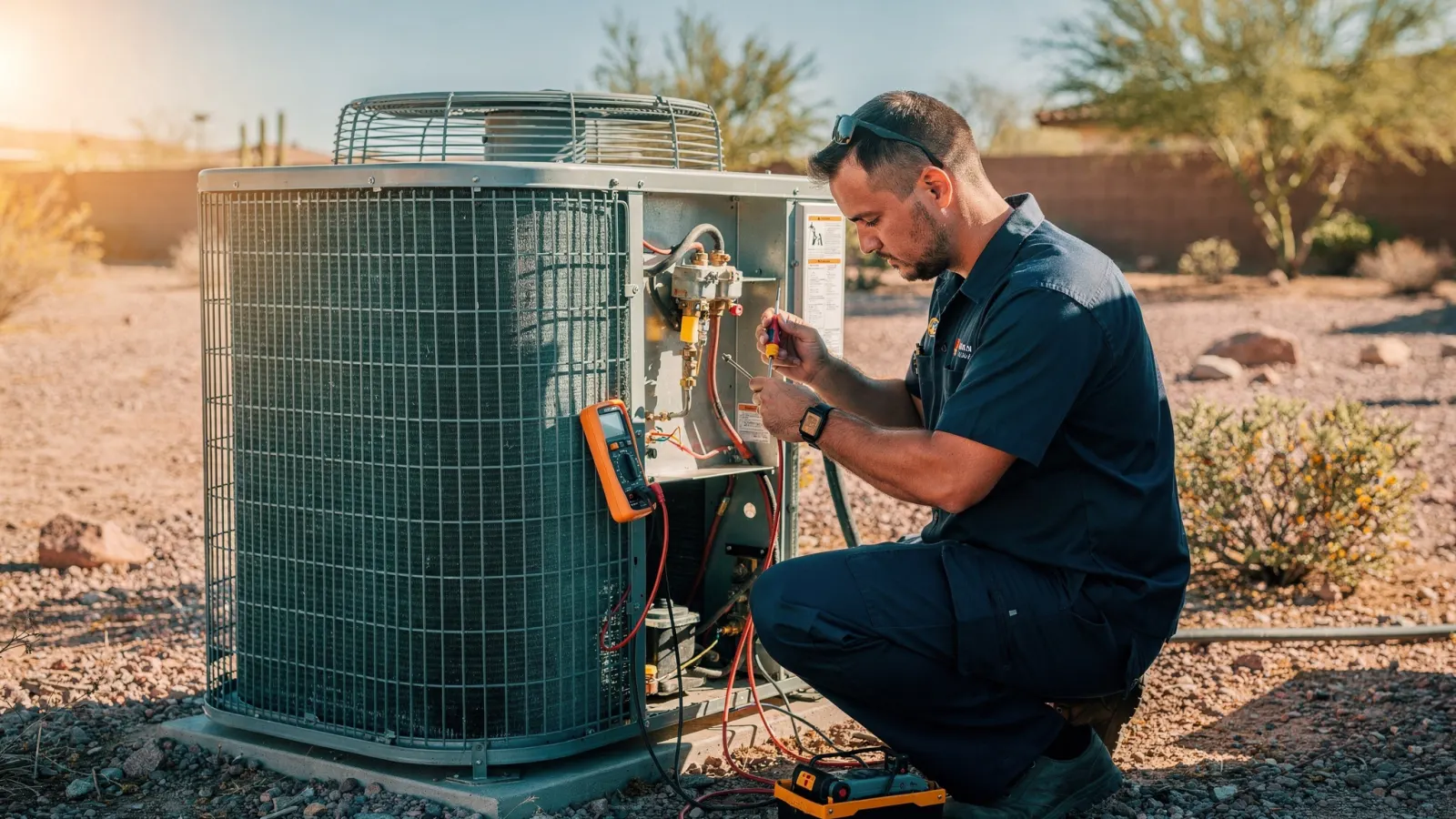
Maintenance plans and pricing
Single tune-ups are priced upfront, and a maintenance agreement covers the spring cooling visit and the fall heating visit together. Plan members get priority scheduling in peak season, which matters when every crew in the Valley is booked in July.
Ask your technician for the current plan pricing in writing, including what is covered, what is not, and the cancellation terms. There is no auto-enrollment and no contract you cannot leave. See how our pricing works for the rest of the picture.
Questions
AC maintenance questions we hear most
Twice a year. A cooling tune-up in March or April before the heat, and a heating check in October. Valley systems run six to eight months annually in heavy dust, so they need more frequent service than the same equipment in a mild climate.
Condenser coil cleaning, capacitor microfarad testing, contactor inspection, amp draw versus nameplate, refrigerant charge verification by subcooling, drain clearing, filter and return inspection, and a documented temperature split. You get a written report with photos of anything trending toward failure.
It prevents the failures Arizona causes most: cooked compressors from dirty coils, no-cooling calls from weak capacitors, and float-switch shutdowns from clogged drains. Maintenance finds those while they are cheap to fix rather than on a 115-degree afternoon.
A clean coil and correct charge reduce cooling energy, and most homeowners notice it in the first full summer month. The larger saving is usually avoiding an emergency repair at peak-season rates with the house at 92 degrees.
Book your tune-up before the first 105-degree week
Spring calendars fill first. Lock in a cooling tune-up now and get ahead of the July rush.