Ductwork
In a 140-degree attic, every duct leak costs you twice
Leaking ducts push cold air into the hottest space in the house, and they pull attic dust into the air you breathe. Both problems have the same root cause, and both are measurable with a static pressure test.
Straight answer
How do you know if your ducts leak, and what does fixing them cost?
The signs are dust streaking at registers, one or two rooms that never reach temperature, higher bills across the whole house, and visible dust or separated tape at joints in the attic. Sealing an accessible system usually costs $900 to $2,500; replacing an attic duct system in a typical Valley home runs $3,500 to $8,000.
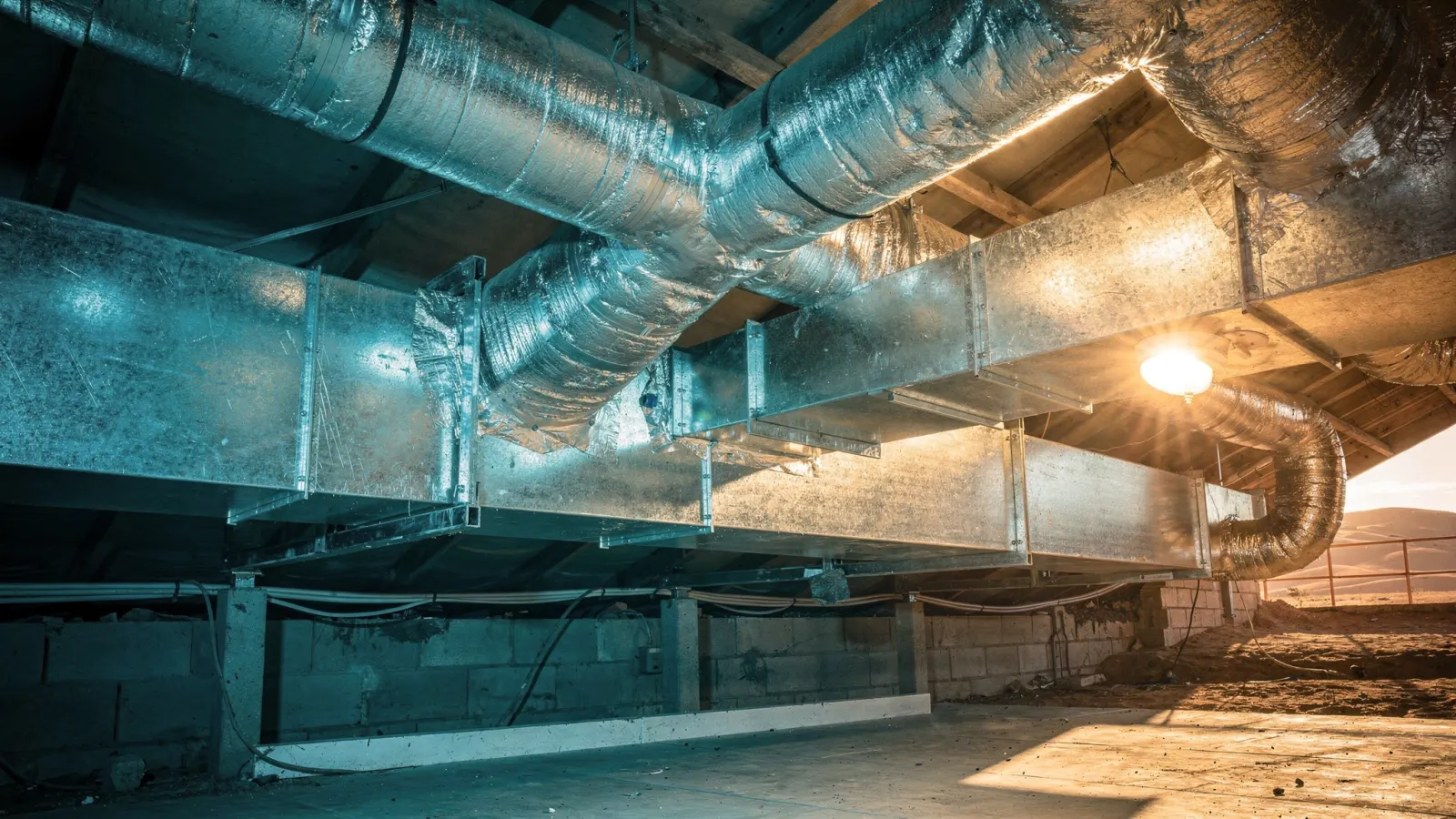
Arizona attics are hard on ductwork. Temperatures above 140 degrees cycle the inner liner, the mastic and the insulation jacket until seams open, which is why duct work here ages faster than in any mild climate.
What our ductwork service includes
- Static pressure measurement at the air handler and at the furthest register to quantify restriction and loss.
- Leak inspection of every accessible joint: plenum, trunk, takeoffs, boots and register connections.
- Mastic and mesh sealing rather than tape, which fails in attic heat within a season or two.
- Insulation upgrades on ducts that are under-insulated for a Valley attic, including boot and plenum wraps.
- Return air corrections where builder-grade returns starve the system and raise static pressure.
- Repair or replacement of damaged runs, disconnected sections and collapsed flex duct, priced line by line.
Common findings
What we find in Valley duct systems
- Disconnected flex runs at takeoffs, common after decades of attic heat and movement.
- Failed cloth-backed tape at every joint, which peels and leaves gaps behind it.
- Undersized returns in homes built during fast-growth years, raising static pressure and reducing airflow.
- Crushed or kinked flex duct where installers routed it around framing instead of through it.
- Bare ducts with missing or degraded insulation, dumping cold air into the attic before it ever reaches a room.
- Unsealed plenums where the largest leaks in the whole system usually sit.
We photograph findings in the attic, because most homeowners have never seen their own duct system.
Pair with duct cleaning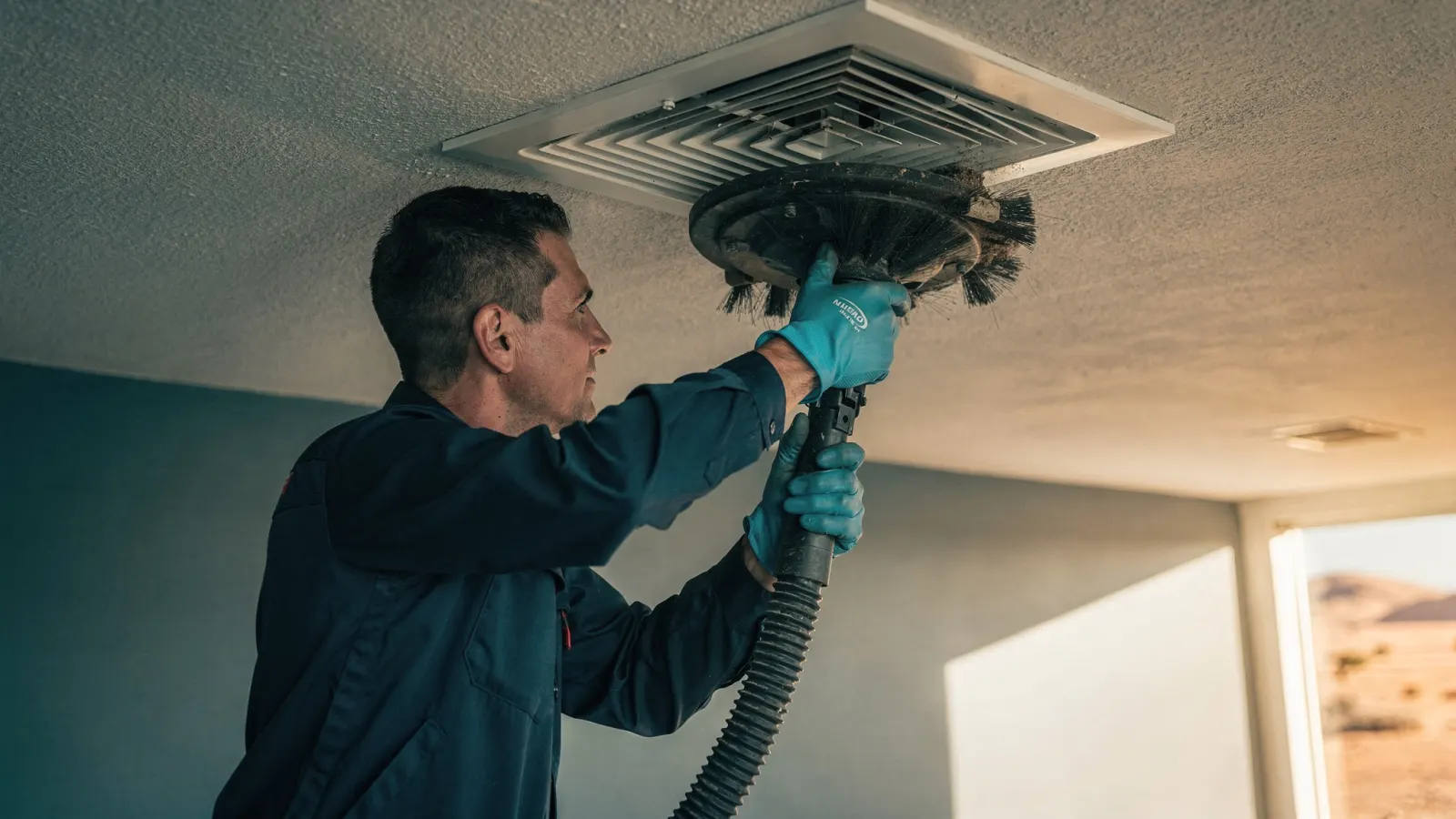
Questions
Ductwork questions
Dust streaking at registers, rooms that never reach setpoint, escalating cooling bills, and dust or separated tape at attic joints. A static pressure and leakage test measures the loss so the decision is based on data.
Sealing an accessible system typically runs $900 to $2,500. Replacing an attic duct system in a typical Valley home runs $3,500 to $8,000 depending on run count, insulation R-value and whether returns are corrected at the same time.
Attic temperatures above 140 degrees cycle the duct liner, the mastic at joints and the insulation jacket until seams open. Ducts that last decades in a conditioned space degrade far faster when they bake every summer.
Often yes, because leaking supply ducts deliver cold air into the attic instead of your rooms. Sealing and insulating recovers much of that loss. Most homeowners notice the upstairs comfort difference first, then the bill.
Rooms that never cool properly?
Measure the ducts before you replace the equipment. A static pressure test answers it in an hour.