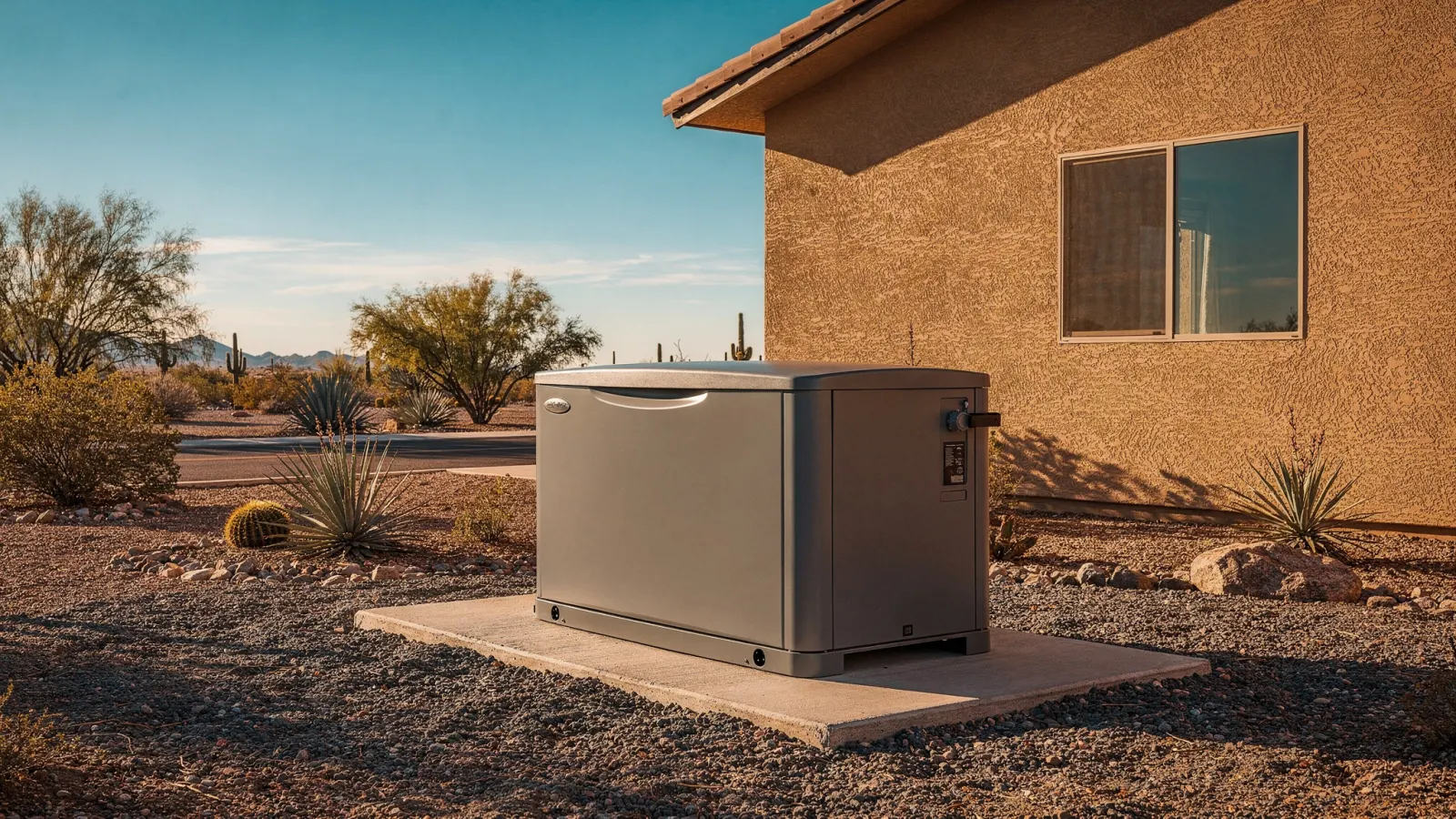
Standby generators
Backup power for the night the monsoon takes the grid down
An Arizona outage in July is a health risk, not an inconvenience. A standby generator starts automatically within seconds and keeps the air conditioning, refrigeration and medical equipment running without anyone home to pull a cord.
Straight answer
What does a standby generator cost, and what size do you need?
An essential-circuit system that covers the refrigerator, a few rooms and a mini split typically runs $5,500 to $12,000 installed in the Valley. A whole-home system that also carries the central air conditioner usually runs $12,000 to $25,000. Both prices include the unit, transfer switch, gas or propane work, pad, permit and inspection.
Sizing follows a load calculation on your actual equipment. Central air conditioning is the deciding factor, because a compressor draws a large startup surge that either pushes you into a bigger generator or requires a soft-start kit on the condenser.
What our generator installation includes
- Load calculation and circuit selection so you know exactly what will run and what will not during an outage.
- Automatic transfer switch installation at the service, including load-shedding modules where the panel needs them.
- Gas or propane supply work under our own licence, including sizing the line to the generator's demand.
- Concrete pad and clearances planned for exhaust, service access and HOA requirements.
- Soft-start kit installation on the air conditioner where it avoids a much larger generator purchase.
- Permit, inspection, commissioning and a full-load test, then a walkthrough of what the system will and will not carry.
Sizing decisions
What people usually want backed up
- Central AC: the single biggest load and the reason most Valley systems are sized larger than owners expect.
- Refrigeration and freezers: the reason a small essential-circuit system still makes sense for many homes.
- Medical equipment: CPAP, oxygen concentrators and refrigerated medication push this from a comfort decision to a safety one.
- Well pumps and septic: outside city service areas, these are non-negotiable and change the sizing math.
- Home office and network: modem, router and a few circuits keep remote work possible through a multi-day outage.
We list exactly which circuits are on the backup panel before installation, so there is no mystery during the first outage.
See all electrical services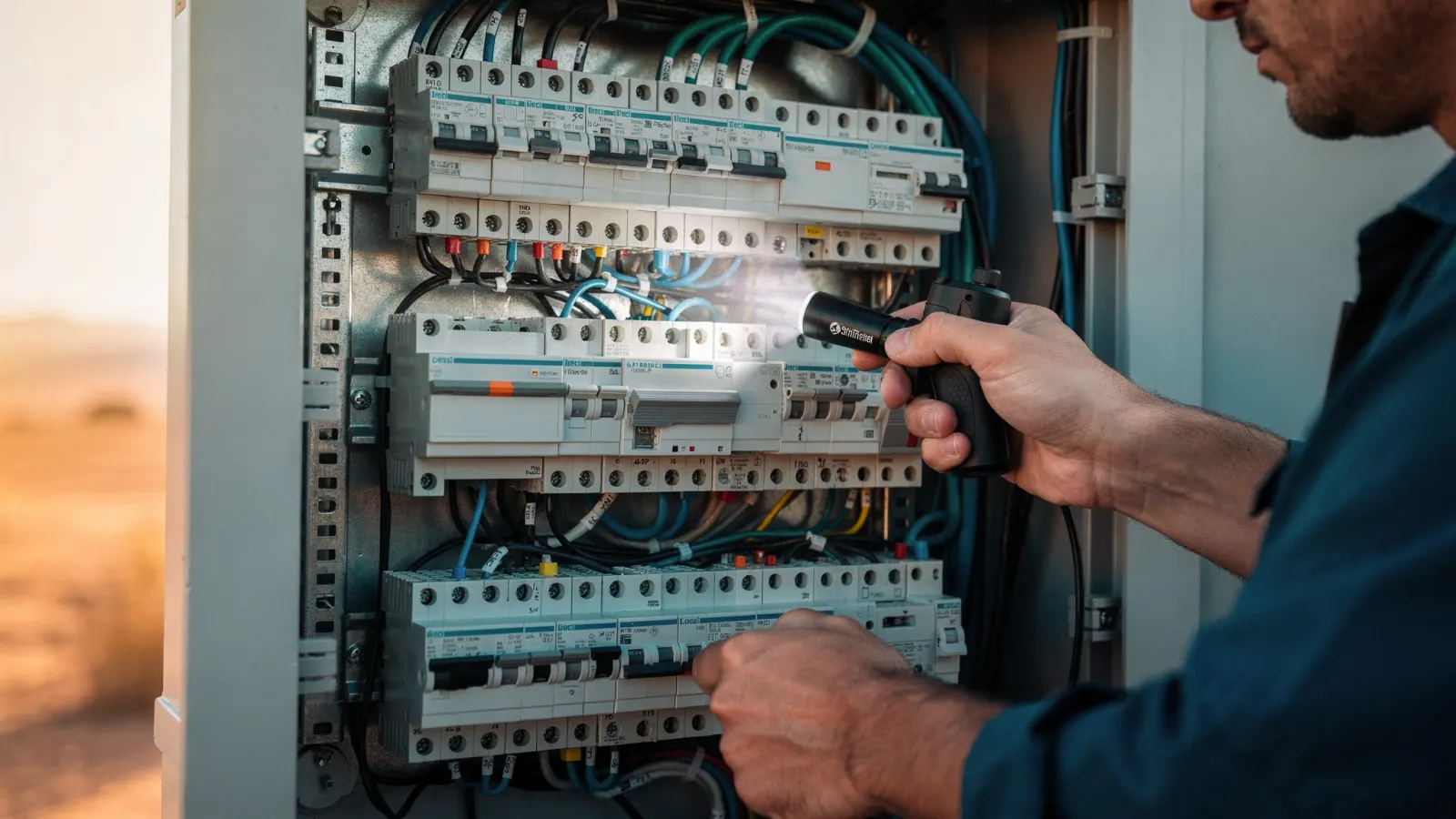
Questions
Standby generator questions
Essential-circuit systems typically run $5,500 to $12,000 installed, and whole-home systems that include the central AC run $12,000 to $25,000. That covers the unit, transfer switch, gas or propane work, pad, permit and inspection.
Usually 14 kW to 22 kW, because compressor startup draws a large surge. A soft-start kit on the condenser often lets a smaller generator carry the same air conditioner, and we price that option alongside the bigger unit.
As long as the gas supply continues, which is the main advantage of natural gas in a wide outage. Propane runs until the tank is empty, so tank sizing and a refill plan matter more with propane.
Yes: oil and filter, air filter, plugs where applicable, battery load test and a transfer test under real load. Generators that sit untested for years are the ones that fail during the outage, which is why our service visit exercises the system under load.
Losing the grid in July is not an option
We size, install and maintain standby systems, including the gas work and the load test.